Publishing Arthur
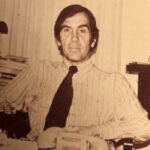
I first met Arthur Young in the fall of 1972 when he visited Berkeley to meet with Alan Cohen and plan a course on the theory of process at John F. Kennedy University in Orinda, CA. Arthur’s friend Ken Pelletier had arranged the meeting. At that time I was acting as a literary agent for Ken and he introduced me to Arthur during his visit. In May 1973 I phoned Arthur and offered to represent him. He accepted.
Mine were not the first attempts to find a publisher for The Reflexive Universe. Ten years earlier, Macmillan had said no, and Knopf told the author his work “didn’t light any fires” with them.
The first two editors to whom I submitted the manuscript rejected it without comment, and a third politely declined, but sent along a baffling reader’s report. The reader hired to evaluate the work was “negative on it,” yet admitted that after he reread and thought about it, he found the book “an ambitious project … extraordinarily imaginative in its ability to assimilate the nugget principles of everything from quantum physics to genetic structures and from those principles establish certain hypotheses about the developmental organization of earth life.” He was somewhat suspicious of an “inordinate amount of argument by analogy,” feeling that was “always risky in science.” He was quick to add, however, that this was “frequently the way of inventors,” because it was inventors who through appropriate analogy “opened the doors to new scientific understanding.” Perhaps they were “the poets of the physical.”
In a most peculiar afterthought, the reader said that in his judgment The Reflexive Universe was “perhaps a great book, but probably not just a ‘good’ book.” He did not explain what he meant by that, but did warn his editor that there was “possibly a brilliant book here.” The final question seemed to be: If someone else should publish it “and get the masterpiece, would you regret having turned it down?”
The fourth editor to whom the book was sent was Merloyd Lawrence of Delacorte Press. She had none of the qualms of the previous editors. Curiously enough, her enthusiasm was based on another reader’s report. The reader, Sheila LaFarge, found the writer “superbly lucid, lively, often humorous,” with “a rare, encouraging belief in human beings, our free will, our potential, which his theory demonstrates.”
Predicting the work would be debated by students and authorities in many fields, LaFarge felt it would “be accessible and fascinating to a wider audience as well.” She found it exciting to come in contact with such “a flexible, inventive, informal, balanced, life-loving mind,” one that was so free with ideas and so direct: “Young’s very original analogies come from nature and science, mechanics and everyday experience … he never hides behind jargon …. He shows how ways of thinking affect how people live, what they can invent and where they are blind. He approaches this as a practical man, not an academic interested in concepts. He shows how theories, which are only partial formulations of the whole truth, make their own binds and breakthroughs.”
Most of all, LaFarge was impressed because Young never blurred his argument by speculating about the unknown; his argument was built “on Western scientific research.”
Acting on this report, the editor Merloyd Lawrence recommended that Delacorte Press accept the manuscript. And so both The Reflexive Universe and The Geometry of Meaning were contracted on October 8, 1974, and published on September 2, 1976. In 1979, Delacorte published The Bell Notes, excerpts from Arthur’s journals illustrating the dramatic years of his transition from inventor to cosmologist.
Subsequently, under the imprint of Robert Briggs Associates, it was my privilege to publish other books by Arthur Young: Which Way Out? and Other Essays; Mathematics, Physics and Reality; and Zodiac: An Analysis of the Symbolic Degrees; as well as a series of “Broadsides” on the Theory of Process and other subjects of interest to Young.


