Excerpts from The Consciousness Puzzle © 1978 (unpublished)
My first meeting with Arthur Young took place a few weeks after my arrival in San Francisco in 1974. Ken Pelletier had suggested I stop by the Youngs’ apartment at the back of the bungalow in Berkeley that housed the Institute for the Study of Consciousness before one of the Thursday evening colloquiums.
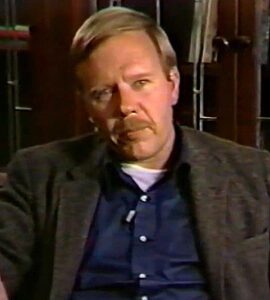
I had to wait a few minutes in the living room which doubled as a reading room and study while Young completed an interview with a visiting astrologer interested in some of his more esoteric research. Astrological charts and books on science and metaphysics were strewn over the tables around his chair. When it was my turn, he looked up over his reading glasses, half raised himself from his armchair, smiled, and shook my hand firmly. As I explained that I had left my position teaching political science at MIT to come to California to explore the new field of psychic research, he interrupted me brusquely to say, “If you’re looking for a job, I’m afraid I can’t help you.” Over the years he had apparently sponsored the research of numerous individuals and organizations, but was now putting his resources into the Institute. I was primarily interested in his suggestions for reading and self-study. He urged me to brush up on my physics, and mentioned that his two books were available in bound Xeroxed form if I wanted to explore his ideas on how psychic phenomena related to consciousness and cosmology.
Arthur Young’s work was one of many subjects I set out to explore in my introduction to the psychic frontier. It enjoyed no special status in my priorities, and I even wondered if it was worth my time to pore through two dense books that at a surface glance dealt with broad theories of evolution and abstruse laws of the universe seemingly derived from astrology and numerology. The connection with parapsychology was not immediately obvious, to say the least. Young’s paradigm seemed so broad as to fit any phenomena—a kind of general theory of the universe. I resigned myself to the fact that it would take me some time to understand “the theory,” as he referred to it, alternating as it did from embarrassingly simple commonsense examples from real life that forced you “to think on your feet,” to fundamental insights from quantum physics and relativity theory that for me at the time might as well have been written in Greek.
For all the accumulated insights and wisdom that must have come out of his years of investigating psychic phenomena, Young did not speak often or at length about them. They were definitely secondary in his thinking, so much data that had been absorbed by his mind as part of a larger quest. Young took a personal interest in my continuing quest to understand psychic phenomena, although he made it clear that his theory was not primarily oriented toward explaining the “gee-whiz.” He invited me to prepare an outline of questions and ideas that I felt should be included in a theory broad enough to cover psychic phenomena. I was excited at the prospect, hoping that it might be one way to get him to open up—to pry loose some of the secrets of his understanding.
A small group of Institute “regulars” was assembled one evening in the Youngs’ living room to hear my presentation. The overall thrust of the memorandum I drew up, “Questions for a Cosmological Paradigm,” was that we should apply the scientific method in as open-minded a manner as possible to the analysis of unexplained phenomena. I thought I had developed the questions for discussion as rationally and logically as I could, and was stunned when Young dismissed them with scarcely a comment. “Questions that arise from the current scientific paradigm have proved fruitless in more than 80 years of investigating psychic phenomena,” he replied bluntly. “A purely rational approach will never yield answers.” He then shifted the discussion to what he felt were the “central questions”: Who or what were we, and why were we here? Could we establish a formal status for man and “the self,” or “monad,” as he referred to it, in a cosmological paradigm? Did the self have an evolutionary goal, or more broadly, was there evolutionary purpose in the universe? Ultimately, what was the meaning of existence?
There was a fundamental paradox in Arthur Young that eluded both scientists and mystics. He sought to use reason to approach the irrational. His highly cerebral style and the intellectual emphasis of the Institute “turned off” many students of consciousness who wanted a direct, experiential approach. He would shrug his shoulders, saying, “They’re just looking for the fastest way to get to the highest state of consciousness.” At the same time his interest in astrology and alchemy was just the kind of “pseudo-science” that the scientifically oriented wanted to avoid.
The time had come for me to make a personal decision that would influence the whole direction of my quest. I had a cursory familiarity with “the theory,” enough to sense intuitively that it stood alone among the numerous efforts to explain psychic phenomena—but I still hadn’t “got” it. I had yet to see the connections between the numerous strands in Young’s system of thought. Until I did, his ideas had little immediate value to an understanding of the paranormal. That meant I would have to become a serious student of his work—an apprentice of sorts.
Much of the interest in “higher consciousness” in the Western world has taken the form of a search for wise men—for enlightened individuals who have a profound understanding of reality and can convey that wisdom to aspiring students. The presumption has generally been that such enlightened figures would come from the great spiritual and metaphysical traditions of the East. Acting on this belief, many Americans have gone to the furthest reaches of the Indian subcontinent in search of a personal “guru.” It was only a matter of time before the flourishing American “spiritual supermarket” began to attract itinerant wise men from the East, eliminating much of the element of distance from “the search.”
The search for a guru and spiritual enlightenment had not been my major concern in coming to the Bay Area. I felt sufficiently grounded in reality and comfortable with my growing self-understanding, not to need a spiritual teacher. With my introduction to psychic phenomena I had become increasingly preoccupied with finding explanations of the paranormal. This had been the basis of my attraction to Arthur Young and his paradigm. However, as I began to realize the scope of Young’s ideas and the shakiness of my own assumptions about the primacy of objective reality, it began to occur to me that Arthur Young might be a kind of guru or “master” that none of us had expected—a teacher from the West who blended the scientific and metaphysical traditions of the West!
Once I “saw” Arthur Young from this perspective, a lot of things suddenly made sense. The division between science and metaphysics had originated in the West. Reason and the scientific method was the source of the power and glory of Western civilization that had enabled it to dominate the world. But the price of this power had been a separation from spiritual roots, from the ground of being and value. Why should one now look to the East for a reconciliation of the two? One could find insights there, but not fundamental understanding of a problem that was essentially organic to the West.
A scientific “man of knowledge” who knew the language of quantum physics, mathematics, and molecular biology could say more to Western man about the interface of non-objective and objective realities than could the most articulate Avatar or guru. The East lacked a conceptual language of comparable power and precision. The scientific “man of knowledge” had the power or siddhi of seeing the world as a totality, but from the perspective and evolutionary frontiers of Western science. A few decades before the discoveries of quantum physics, such a Western vision of the universe would not have been possible. Now Arthur Young was perhaps the first of his generation to give the vision a formal statement.
I had made my decision. I would sign up as an apprentice for the venture into the unknown.


